Cameron Koch · 3 November 2026
Encryption Strategies Employed by Emerging Digital Services for Enhanced Privacy Controls
Emerging digital services have turned to sophisticated encryption methods to meet growing demands for user privacy, and these approaches integrate multiple layers of protection that safeguard data during transmission and storage. Services in sectors such as cloud computing and secure messaging platforms rely on protocols that prevent unauthorized access while allowing functional operations to continue without interruption.
Core Encryption Methods in Use Today
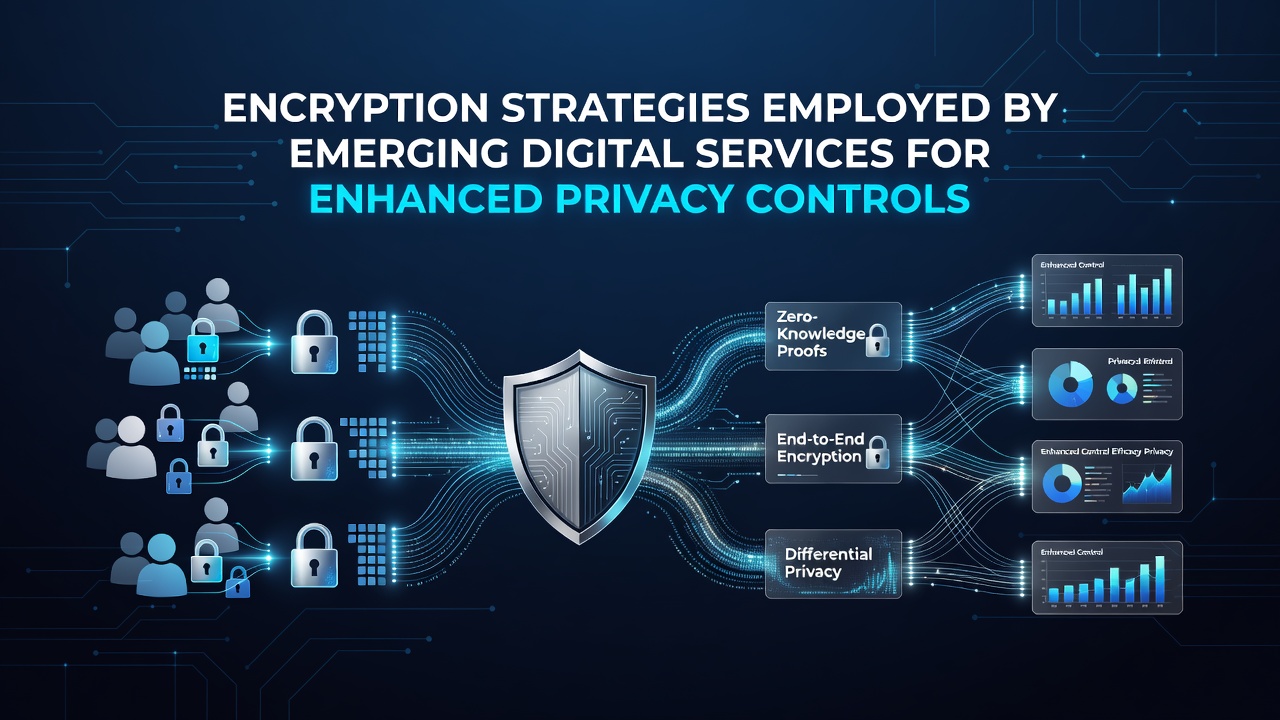
End-to-end encryption forms the foundation for many new platforms, where data gets encrypted on the sender's device and remains inaccessible to intermediaries until it reaches the intended recipient. Researchers at institutions like the National Institute of Standards and Technology have documented how these systems employ algorithms such as AES-256 combined with key exchange mechanisms like ECDH to establish secure channels. Observers note that this setup reduces risks from server breaches because service providers never hold decryption keys in usable form.
But here's the thing: emerging services often layer additional techniques on top of basic encryption to address specific vulnerabilities. For instance, forward secrecy ensures that session keys change frequently, which means compromised long-term keys do not expose past communications. Data shows that platforms adopting these measures have seen measurable decreases in successful interception attempts according to reports from security audits conducted across multiple regions.
Advanced Approaches Gaining Traction
Homomorphic encryption allows computations on encrypted data without first decrypting it, and this capability proves useful for services handling sensitive analytics or machine learning tasks. European agencies including those under the EU's cybersecurity framework have highlighted implementations where financial and health-related platforms process information while keeping it protected throughout. Figures reveal adoption rates rising steadily as computational overhead decreases with improved hardware accelerators.
Zero-knowledge proofs represent another strategy where one party can verify information without revealing the underlying data itself. Emerging digital services in identity verification and blockchain-related applications use these proofs to confirm user credentials or transaction validity. Turns out this method aligns well with regulatory requirements for minimal data exposure, as noted in studies from Canadian research centers focused on privacy technologies.

Quantum-resistant algorithms have entered planning stages for forward-looking services, especially since developments projected for November 2026 include broader testing of post-quantum cryptography standards. The National Institute of Standards and Technology continues to finalize selections that services can integrate to protect against future quantum computing threats, while organizations in Australia have begun pilot programs to evaluate compatibility with existing infrastructure.
Implementation Patterns Across Platforms
Many new services combine these strategies into hybrid systems that balance security with performance needs. A messaging application might use end-to-end encryption for chats alongside homomorphic elements for metadata analysis, and this integration occurs through carefully designed key management protocols. Experts have observed that such combinations help services comply with data protection rules without sacrificing user experience features like search or notifications.
Key rotation schedules and secure enclave usage further strengthen these setups by limiting exposure windows for sensitive materials. Industry reports from the Asia-Pacific region indicate that services incorporating regular audits of their encryption pipelines maintain higher compliance scores during external reviews. What's interesting is how these practices scale across different service sizes, from startups to larger operators, because modular designs allow incremental upgrades as threats evolve.
Regulatory and Technical Influences
Government bodies worldwide shape encryption deployment through guidelines that encourage transparency and interoperability. The Information Commissioner's Office in the United Kingdom has issued frameworks emphasizing user control over encryption keys, whereas similar directives from Singapore's data protection authority focus on cross-border data flows. These influences lead services to adopt open standards that facilitate verification by third parties.
Academic papers from universities in Japan and Germany have analyzed real-world deployments, revealing that services employing multiple encryption layers experience fewer privacy incidents over time. And yet the transition requires careful coordination because legacy systems often need updates to support newer protocols without introducing compatibility issues.
Conclusion
Encryption strategies continue to develop as emerging digital services respond to technical challenges and oversight expectations, with methods like end-to-end encryption, homomorphic techniques, and zero-knowledge proofs forming core components of modern privacy architectures. As November 2026 approaches, further integration of quantum-resistant options alongside established standards will likely expand the options available to platform operators seeking robust protections. These approaches, supported by ongoing research and regulatory alignment across regions, provide the mechanisms through which services maintain data confidentiality while supporting operational requirements.