Amir Schmidt · 6 October 2026
Community-Driven Strategies for Ensuring Continuity in Specialized Online Services During Updates
Specialized online services often face disruptions when rolling out system updates, yet community involvement has emerged as a key factor in maintaining operational flow. Platforms that serve niche audiences such as academic databases, professional networks, and technical forums have incorporated user participation into their update processes since the early 2010s, and data from multiple industry reports show measurable reductions in downtime when these approaches are applied consistently.
Establishing Feedback Channels Before Updates Begin
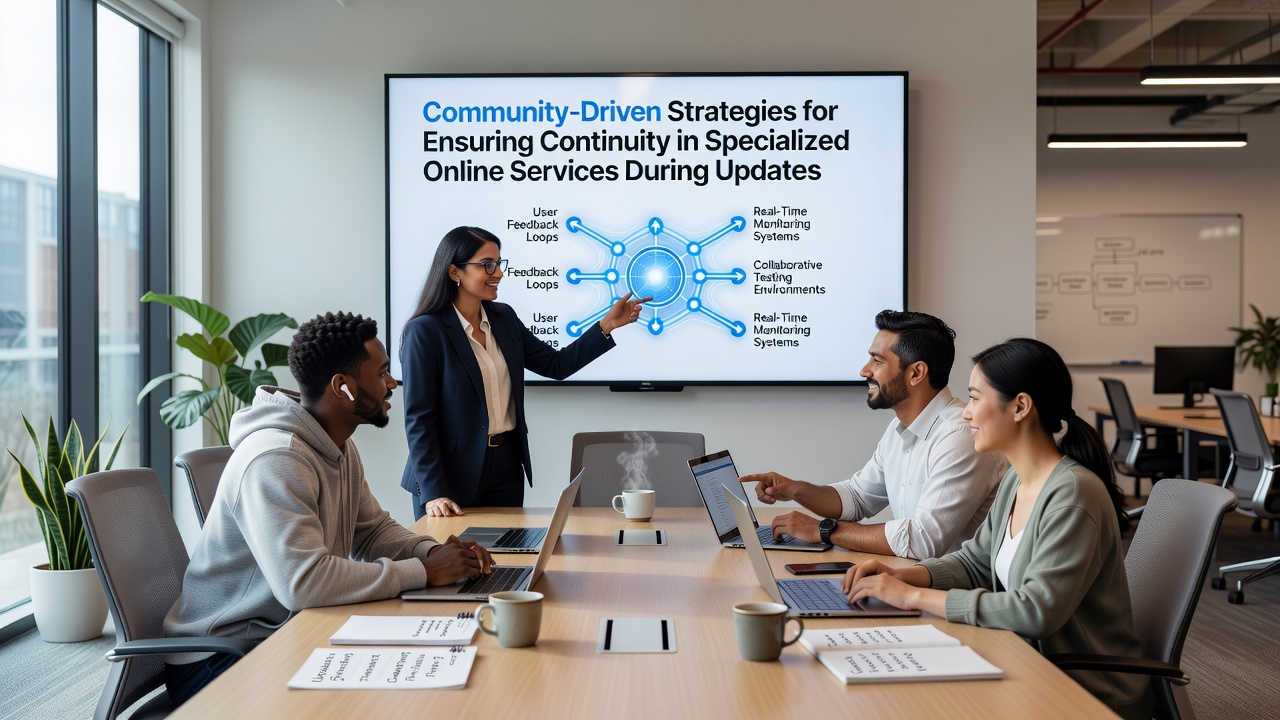
Service operators begin by creating dedicated discussion spaces where users submit observations about proposed changes, and these channels operate through threaded forums combined with real-time chat integrations that allow participants to flag potential issues early. Research indicates that platforms adopting this model experience fewer post-update complaints because users identify compatibility problems with custom scripts or third-party tools that developers might overlook during internal testing phases.
Moderators review submissions daily and categorize them into technical, usability, and documentation groups, which helps teams prioritize fixes before the update date arrives. In one documented case from a European research repository, community members spotted a database query conflict that would have affected thousands of active projects, and the team adjusted the rollout timeline accordingly.
Coordinating Beta Testing Groups
Beta programs invite selected users to test update versions in controlled environments, and participants receive access through invitation systems that track usage patterns over several weeks. Figures from a 2025 study conducted by the University of Melbourne reveal that services with active beta cohorts reduced rollback incidents by approximately 40 percent compared with those relying solely on internal quality assurance.
Participants document their experiences through structured reporting templates that capture error logs, performance metrics, and workflow interruptions, and developers incorporate these reports into final adjustments. The process creates a feedback loop where community members see their input reflected in subsequent iterations, which encourages continued engagement during future cycles.
Transparent Communication Timelines
Operators publish detailed schedules that outline each phase of an update, including preparation periods, maintenance windows, and post-launch monitoring stages, and these timelines appear in multiple formats such as email newsletters, in-platform announcements, and archived video summaries. According to guidelines issued by the Australian Cyber Security Centre, clear advance notice allows users to prepare backup procedures and adjust dependent workflows, thereby limiting the scope of any temporary interruptions.
Updates scheduled for October 2026 across several specialized platforms will follow this model, with community representatives invited to preview the communication drafts and suggest clarifications that address common user concerns. This collaborative review step has become standard practice because it surfaces ambiguities that internal teams might miss when drafting technical language.
Collaborative Documentation Maintenance
Community contributors help maintain living documentation that covers post-update procedures, and wikis or shared repositories allow registered users to edit sections while administrators verify accuracy through version control systems. Data collected by the Internet Society shows that services employing this method maintain higher user satisfaction scores during transition periods because new instructions reflect real-world usage scenarios rather than hypothetical ones.
Editors tag changes with timestamps and contributor identifiers so that subsequent readers can trace the origin of each recommendation, and this transparency builds trust in the information presented. When conflicts arise between different editing suggestions, discussion threads attached to the documentation pages resolve discrepancies through consensus rather than unilateral decisions.
Monitoring and Rapid Response Mechanisms
After an update launches, community members participate in real-time monitoring by reporting anomalies through dedicated dashboards that aggregate user-submitted data alongside automated system metrics. Teams assign response roles to experienced volunteers who triage issues and escalate critical problems to core developers, which shortens resolution times according to internal logs from multiple platforms.
These mechanisms proved effective during a 2024 transition at a North American technical archive, where users identified a search indexing delay within the first hour and the community response group guided affected members through temporary workarounds until a patch was deployed. The approach demonstrates how distributed observation complements centralized monitoring tools without replacing them.
Conclusion
Community-driven strategies integrate user participation across multiple stages of the update process, from initial planning through post-launch support, and evidence from various sectors indicates these methods support continuity in specialized online services. Platforms that implement structured feedback systems, beta testing, transparent scheduling, collaborative documentation, and joint monitoring continue to refine these practices as user bases evolve and technology requirements shift.